

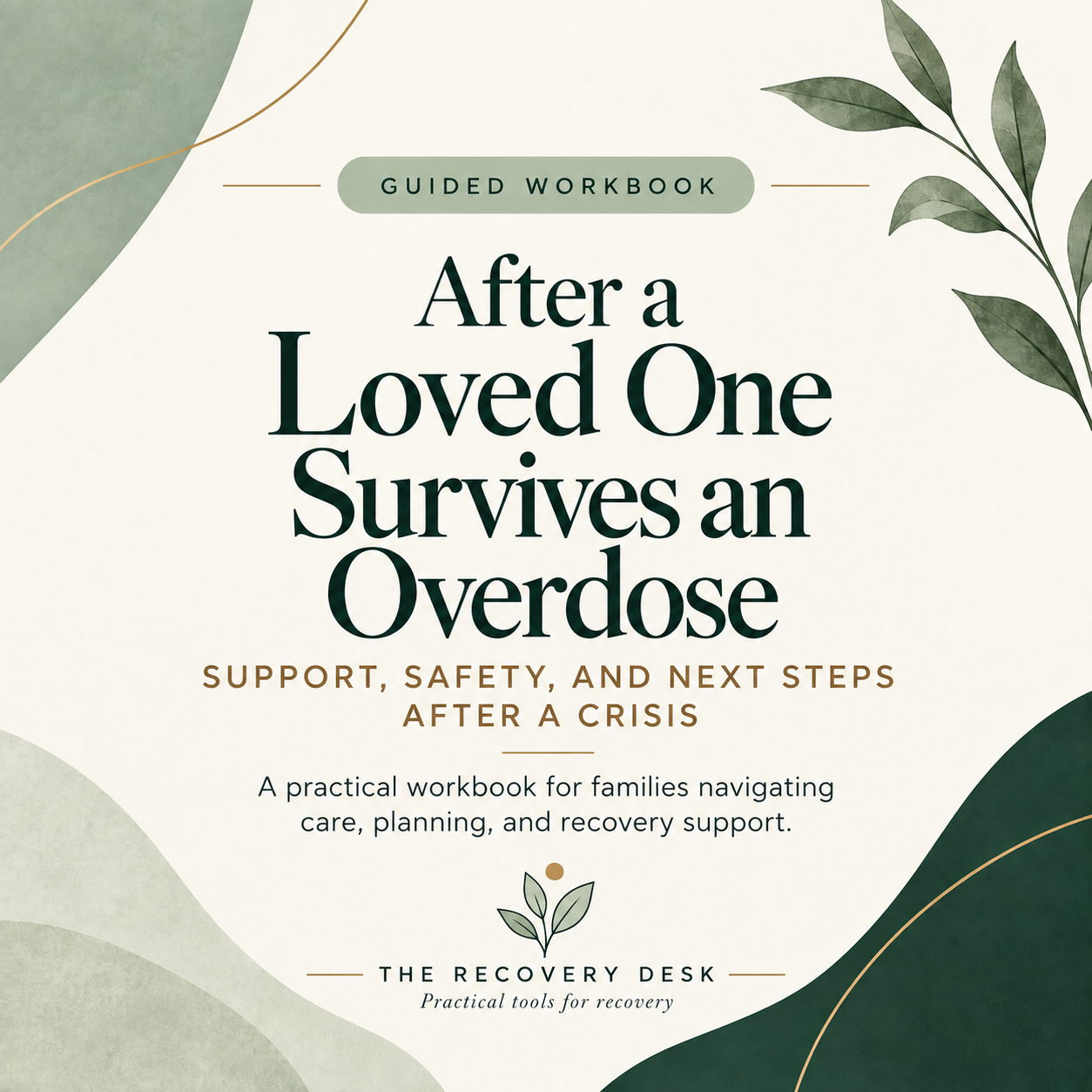
After a Loved One Survives an Overdose
After a Loved One Survives an Overdose
A Practical Family Support, Emotional Recovery & Safety Planning Workbook | 15-Page Printable PDF
When someone you love survives an overdose, the experience can leave you feeling frightened, overwhelmed, relieved, angry, or uncertain about what comes next.
Even after the immediate medical emergency has passed, you may find yourself worrying about another overdose, struggling to process what happened, or wondering how to support your loved one without taking responsibility for every decision they make.
You might have questions about medical follow-up, how to discuss the experience with your loved one, where to find overdose prevention resources, or how to manage your own emotional response.
After a Loved One Survives an Overdose is a practical, 15-page guided workbook designed for family members, partners, and loved ones navigating the period following a substance-related overdose emergency.
Through five focused chapters, realistic examples, guided reflection exercises, and printable worksheets, this resource helps you organize questions for healthcare professionals, acknowledge your own emotional needs, prepare supportive conversations, identify appropriate community resources, and develop a realistic support plan.
The goal is not to make you responsible for preventing every future emergency or managing your loved one's recovery.
Instead, this workbook provides practical tools to help you navigate the aftermath of an overdose while recognizing the importance of professional medical care, personal boundaries, and support for your own wellbeing.
WHAT'S INCLUDED?
1. Navigating the Immediate Aftermath of an Overdose
An overdose can be frightening, even when your loved one appears to have recovered from the immediate emergency.
This chapter helps you organize important questions and next steps following an overdose while emphasizing the importance of professional medical assessment and follow-up.
Explore:
- Identifying instructions provided by emergency responders or healthcare professionals.
- Preparing questions about medical follow-up and ongoing care.
- Recognizing the importance of following professional emergency guidance.
- Organizing immediate family needs following the emergency.
- Identifying who can help with practical responsibilities during the next few hours.
Includes a printable post-emergency planning worksheet to help you organize professional instructions, unanswered questions, and immediate next steps.
This section is not a home medical treatment protocol. Medical assessment and emergency response decisions should be guided by qualified professionals.
2. Understanding and Supporting Your Own Emotional Response
A loved one's overdose can bring up many different emotions, sometimes all at once.
You may experience relief that they survived while also feeling frightened, angry, exhausted, emotionally numb, or uncertain about the future.
This chapter encourages you to acknowledge your own experience without expecting yourself to process everything immediately.
Explore:
- Recognizing your emotional and physical needs following an emergency.
- Identifying opportunities for rest, food, and basic self-care.
- Considering whom you feel comfortable speaking with.
- Establishing privacy around details you do not wish to share.
- Recognizing which major decisions may be able to wait until the immediate shock has passed.
- Identifying practical support for everyday responsibilities.
Includes a guided worksheet for developing a personalized 24-hour family wellbeing plan.
3. Preparing a Supportive Conversation After the Crisis
Following an overdose, you may want to discuss what happened, express your concerns, or explore whether your loved one is interested in additional support.
These conversations can be emotionally difficult, particularly when both people are still processing the emergency.
This chapter focuses on preparing respectful, non-accusatory communication while recognizing your own needs and boundaries.
Explore:
- Identifying what you want your loved one to understand about your experience.
- Preparing a conversation based on observable concerns rather than assumptions.
- Considering what support your loved one may want.
- Identifying the assistance you are realistically able and willing to provide.
- Exploring how to discuss treatment information or overdose prevention resources.
- Recognizing when a conversation may become unsafe or overwhelming.
Includes a printable worksheet for developing a brief, supportive conversation opener.
The focus is on communication and practical support rather than demanding promises, confessions, or immediate decisions about treatment.
4. Finding Overdose Prevention Resources and Professional Support
You may want to become more informed about overdose prevention and emergency response following a loved one's overdose.
This chapter encourages you to connect with qualified local services that can provide current information, practical training, and appropriate support.
Explore:
- Identifying where naloxone and overdose response training may be available.
- Preparing questions for pharmacists or trained service providers.
- Confirming local emergency and follow-up contact information.
- Recognizing practical barriers that could interfere with accessing assistance.
- Identifying appropriate community resources for additional information and support.
- Preparing an accessible list of verified emergency and support contacts.
Includes a printable resource-planning worksheet to help you identify appropriate services and organize your next steps.
The workbook encourages practical training from qualified providers rather than relying on written exercises as a substitute for emergency response instruction.
5. Building a Support Network Without Carrying Every Responsibility Alone
Supporting someone after an overdose can sometimes lead family members to feel responsible for monitoring their loved one constantly.
You may find yourself losing sleep, neglecting personal responsibilities, or feeling unable to leave your loved one alone.
This chapter encourages you to consider how professional services, community resources, peer support, and trusted individuals may form part of a broader support network.
Explore:
- Identifying responsibilities you may have taken on alone.
- Recognizing when constant monitoring or availability has become difficult to maintain.
- Exploring appropriate professional and community support options.
- Considering how different people and services may contribute to a support plan.
- Establishing realistic personal boundaries.
- Protecting important aspects of your own wellbeing and daily routine.
Includes a guided worksheet for creating a support map that does not depend on one person being available at all times.
No family member can guarantee another person's safety, and the workbook does not suggest that you should be solely responsible for preventing future emergencies.
ADDITIONAL PRINTABLE PLANNING TOOLS
The workbook also includes two reusable worksheets designed to help you organize your next steps and prepare important conversations.
Your Situation-to-Action Map
A practical planning page for identifying your current circumstances, immediate needs, available support, and one realistic action you can take within the next 24 hours.
Use this worksheet whenever your family's circumstances change or additional planning becomes necessary.
A Conversation I Can Actually Use
A guided script-building worksheet designed to help you prepare a conversation about your concerns, personal boundaries, or specific support needs.
Use it to organize what you want to communicate, identify a realistic request, and consider your next steps if your preferred arrangement is unavailable.
The worksheet also encourages you to identify appropriate assistance if a conversation becomes unsafe or overwhelming.
WHO IS THIS WORKBOOK FOR?
This resource may be particularly helpful for:
- Family members whose loved one has survived a substance-related overdose.
- Partners and spouses navigating the emotional aftermath of an overdose emergency.
- Parents and adult children concerned about a loved one's substance use and safety.
- Individuals who want to prepare supportive conversations after an overdose.
- People looking for practical ways to organize medical follow-up questions and identify community support.
- Family members interested in learning about naloxone training and overdose prevention resources.
- Individuals experiencing fear, exhaustion, or uncertainty following a loved one's overdose.
- People who want to support someone they care about while maintaining realistic personal boundaries.
This workbook is intended primarily for family members, partners, and other loved ones rather than as a medical treatment guide for the person who experienced the overdose.
It can be completed independently or alongside a trusted support person or appropriate professional.
HOW TO USE THIS WORKBOOK
You do not need to complete every chapter in order.
If the overdose occurred recently, you may prefer to begin with the immediate aftermath section to organize medical instructions and identify unanswered questions for healthcare professionals.
If you're struggling to process your own reactions, the family wellbeing worksheet may be a useful starting point.
If you're preparing to speak with your loved one, you might begin with the communication exercises.
If you're concerned about future emergencies, the professional resource and support-network planning sections can help you identify appropriate training, services, and sources of assistance.
Each chapter includes practical information, a realistic example, guided reflection questions, and a specific planning exercise.
Choose the sections that fit your circumstances, work at your own pace, and seek appropriate professional guidance whenever medical or safety concerns arise.
PRODUCT DETAILS
- Format: Digital PDF download
- Length: 15 pages
- Includes: 5 guided chapters
- Materials: Printable reflection worksheets, family support exercises, realistic examples, conversation planning tools, and reusable planning pages
- Language: English
- Delivery: Instant digital download
- Intended audience: Family members, partners, and loved ones
- Use: Printable for personal use
No physical product will be shipped.
YOU CAN SUPPORT YOUR LOVED ONE WHILE ALSO CARING FOR YOURSELF.
Surviving an overdose does not necessarily mean that every concern has been resolved.
You may still have questions, difficult emotions, and uncertainty about what the future will look like.
You don't have to navigate those experiences alone, and you don't have to become responsible for managing every aspect of your loved one's recovery.
Sometimes, support may involve helping someone connect with appropriate services, learning about overdose prevention, preparing a meaningful conversation, or establishing a broader network of assistance.
Other times, it may mean recognizing your own need for rest, emotional support, or professional guidance.
After a Loved One Survives an Overdose is designed to help you explore these different needs while keeping your loved one's safety, your personal boundaries, and your own wellbeing in mind.
Support your loved one. Recognize your needs. Take the next step together, when possible.
IMPORTANT INFORMATION & LICENSING
This workbook is an educational resource intended for general family support, personal reflection, practical planning, and recovery-related communication.
It does not replace emergency medical care, overdose response training, professional medical assessment, individualized counselling, psychotherapy, or emergency services.
If someone is unresponsive, experiencing abnormal breathing, or showing signs of a possible overdose, contact emergency services immediately (911 in Canada) and follow the instructions of qualified emergency responders.
Naloxone administration does not eliminate the need for emergency medical assessment. Seek guidance from qualified professionals regarding overdose response, monitoring, and follow-up.
The workbook does not guarantee personal safety, prevent future overdoses, establish an individualized emergency response protocol, or ensure a particular recovery outcome.
Your purchase includes a digital PDF for personal use only. You may print pages for your own use. Resale, redistribution, uploading the file to shared drives, or marketing adapted copies as your own product is not permitted.