
Leaving Treatment without a Place to Go
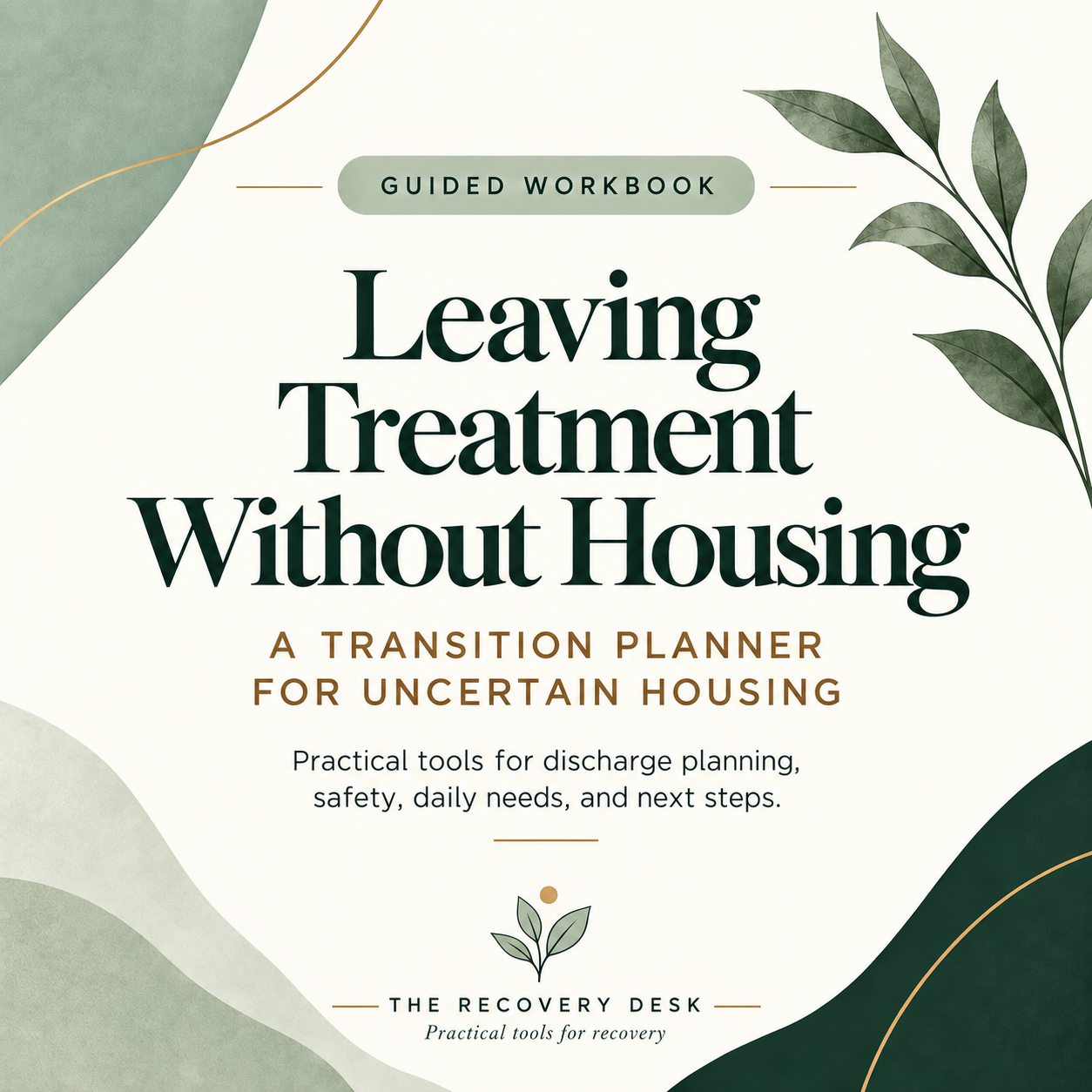
Leaving Treatment Without a Safe Place to Go
A Practical Discharge Planning & Housing Support Workbook | 15-Page Printable PDF
Leaving treatment can be a significant step in your recovery journey. But what happens when you're ready to leave and don't have a safe or stable place to go?
You may be approaching discharge from withdrawal management, residential treatment, or a stabilization program without confirmed housing. Perhaps you've received referrals but haven't secured accommodation, or you're unsure how you'll access medication, attend appointments, or maintain contact with support services after leaving.
Many traditional recovery plans assume you'll be returning to a safe home environment. Unfortunately, that isn't always the reality.
Leaving Treatment Without a Safe Place to Go is a practical, 15-page guided workbook designed to help individuals navigate treatment discharge when housing is uncertain.
Through five focused chapters, realistic examples, guided reflection exercises, and printable planning worksheets, this resource helps you prepare important questions for your treatment team, identify realistic options, organize essential needs, and develop a practical plan for your first 72 hours after discharge.
The goal isn't to solve every challenge before leaving treatment. It's to help you identify what needs to be confirmed, what support may be available, and what your next steps could look like.
WHAT'S INCLUDED?
1. Preparing for a Concrete Discharge Meeting
Before leaving treatment, it's important to understand what has actually been arranged and what still needs confirmation.
This chapter helps you prepare for a discharge planning conversation with your treatment team.
Explore:
- Identifying confirmed accommodation versus referrals that are still pending.
- Preparing questions about housing and overnight options.
- Confirming transportation and arrival instructions.
- Identifying essential documents and supplies needed before departure.
- Establishing a contact person if your discharge arrangements change.
- Preparing backup options when an initial plan falls through.
Includes a printable worksheet for developing four practical questions to bring to your discharge meeting.
2. Planning Tonight Before Planning Next Month
When housing is uncertain, focusing on the next few hours can be more manageable than trying to plan your entire future.
This chapter helps you identify immediate priorities and explore realistic options for your first night after treatment.
Explore:
- Identifying a place to stay or access support during the next six hours.
- Confirming whether overnight accommodation is actually available.
- Planning for food, water, medication access, and basic necessities.
- Considering transportation, weather, and accessibility needs.
- Preparing a backup if your first accommodation option is unavailable.
Includes a guided worksheet for creating a tonight, tomorrow, and backup plan.
3. Maintaining Access to Medical Care and Recovery Support
Leaving treatment without stable housing can create additional challenges when it comes to accessing prescriptions, attending appointments, and maintaining contact with healthcare providers.
This chapter helps you organize important care-related information and prepare questions for qualified professionals.
Explore:
- Confirming medication and prescription arrangements before discharge.
- Identifying your pharmacy and checking its operating hours.
- Preparing transportation and appointment plans.
- Understanding whom to contact if access to medication or care is interrupted.
- Identifying when additional medical assistance may be needed.
Includes a printable care-continuity planning worksheet that can be discussed with your treatment or discharge team.
4. Preparing Essential Belongings, Documents, and Contact Information
When you don't know exactly where you'll be staying, keeping important belongings and information accessible can make a meaningful difference.
This chapter focuses on practical preparation while considering privacy and personal safety.
Explore:
- Identifying essential items to keep accessible.
- Organizing identification and important documents.
- Preparing a list of important contact numbers.
- Developing a backup plan if your phone becomes unavailable.
- Identifying where to seek assistance with replacing missing identification.
- Considering how to store personal information more securely.
Includes a printable carry, store, and replace checklist.
5. Building a 72-Hour Support Plan
The first three days after treatment can involve numerous practical decisions, particularly when housing and support arrangements remain uncertain.
This chapter helps you organize a realistic plan that focuses on immediate needs and manageable next steps.
Explore:
- Identifying your first support contact after leaving treatment.
- Planning a check-in during your first day.
- Organizing a service-navigation task for day two.
- Preparing a follow-up contact for day three.
- Recognizing which decisions can wait and which situations require urgent assistance.
- Identifying backup options if your original plans change.
Includes a guided worksheet for developing a three-day support plan with specific contacts, times, locations, and backup arrangements.
ADDITIONAL PRINTABLE PLANNING TOOLS
The workbook also includes two reusable worksheets designed to help you organize your next steps whenever your circumstances change.
Your Situation-to-Action Map
A practical planning page for identifying your current situation, immediate safety and basic needs, available support, and one realistic action you can take within the next 24 hours.
A Conversation I Can Actually Use
A guided script-building worksheet to help you prepare a conversation with a treatment provider, housing service, support worker, or another person involved in your discharge planning.
Use it to organize what you want to communicate, identify a specific request, and prepare an alternative if your preferred option is unavailable.
WHO IS THIS WORKBOOK FOR?
This resource may be particularly helpful for:
- Individuals preparing to leave withdrawal management, residential treatment, or stabilization without confirmed housing.
- People approaching treatment discharge who are uncertain where they will sleep.
- Individuals who have received housing referrals but have not secured accommodation.
- People concerned about maintaining medication access, appointments, or recovery support after treatment.
- Individuals navigating housing insecurity who want practical tools for discussing discharge arrangements with their treatment team.
- People looking to develop a realistic plan for their first 72 hours after leaving a structured treatment environment.
The workbook can be completed independently or alongside a trusted support person, treatment counsellor, discharge planner, or appropriate professional.
HOW TO USE THIS WORKBOOK
You do not need to complete every chapter in order.
If your discharge date is approaching, you might begin by preparing questions for your treatment team.
If you're unsure where you'll stay tonight, you may prefer to start with the immediate housing planning section.
If medication access or follow-up appointments are your primary concern, the care-continuity worksheet may be a useful starting point.
Each chapter provides practical information, a realistic example, guided reflection questions, and a specific planning exercise.
Choose the sections that match your circumstances, bring relevant questions to your treatment team, and return to the planning pages whenever your situation changes.
PRODUCT DETAILS
- Format: Digital PDF download
- Length: 15 pages
- Includes: 5 guided chapters
- Materials: Printable worksheets, realistic examples, discharge planning exercises, conversation scripts, and reusable planning pages
- Language: English
- Delivery: Instant digital download
- Use: Printable for personal use
No physical product will be shipped.
YOU DESERVE A RECOVERY PLAN THAT REFLECTS YOUR REAL CIRCUMSTANCES.
Leaving treatment without confirmed housing can create uncertainty, but your recovery goals and support needs still matter.
You may not have control over shelter availability, housing waiting lists, or every decision involved in your discharge.
However, you can prepare questions, identify what has been confirmed, ask for appropriate assistance, and develop realistic next steps based on the options available to you.
Sometimes, the most important first step is knowing where you'll go tonight, how you'll get there, and whom you can contact if your plans change.
Leaving Treatment Without a Safe Place to Go is designed to help you organize those decisions while keeping your safety, personal circumstances, and recovery goals at the centre of your planning.
One confirmed step. One support connection. One day at a time.
IMPORTANT INFORMATION & LICENSING
This workbook is an educational resource intended for general discharge preparation, recovery planning, personal reflection, and practical support organization.
It does not replace professional medical care, individualized counselling, discharge planning by qualified professionals, case management, housing placement services, or emergency assistance.
This workbook does not guarantee housing placement, shelter availability, access to treatment, or a particular recovery outcome.
Housing availability, service eligibility, operating hours, and local requirements must be confirmed directly with the appropriate providers.
If you are experiencing immediate danger, a medical emergency, or severe withdrawal symptoms, seek appropriate emergency or professional medical assistance.
Your purchase includes a digital PDF for personal use only. You may print pages for your own use. Resale, redistribution, uploading the file to shared drives, or marketing adapted copies as your own product is not permitted.