
Money, Shame & Recovery
Money, Shame & Recovery
A Practical Financial Shame, Money Trigger & Recovery Planning Workbook | 49-Page Printable PDF
Money can carry a lot more than numbers during recovery.
Debt, collections, missed payments, borrowing from family, money lost while using, or avoiding your bank account can bring intense shame and anxiety.
At the same time, money itself can sometimes become a trigger.
Having money may increase urges to use or spend. Not having enough can create panic and hopelessness. Payday, unexpected cash, debt pressure, or a collection notice can all affect recovery differently.
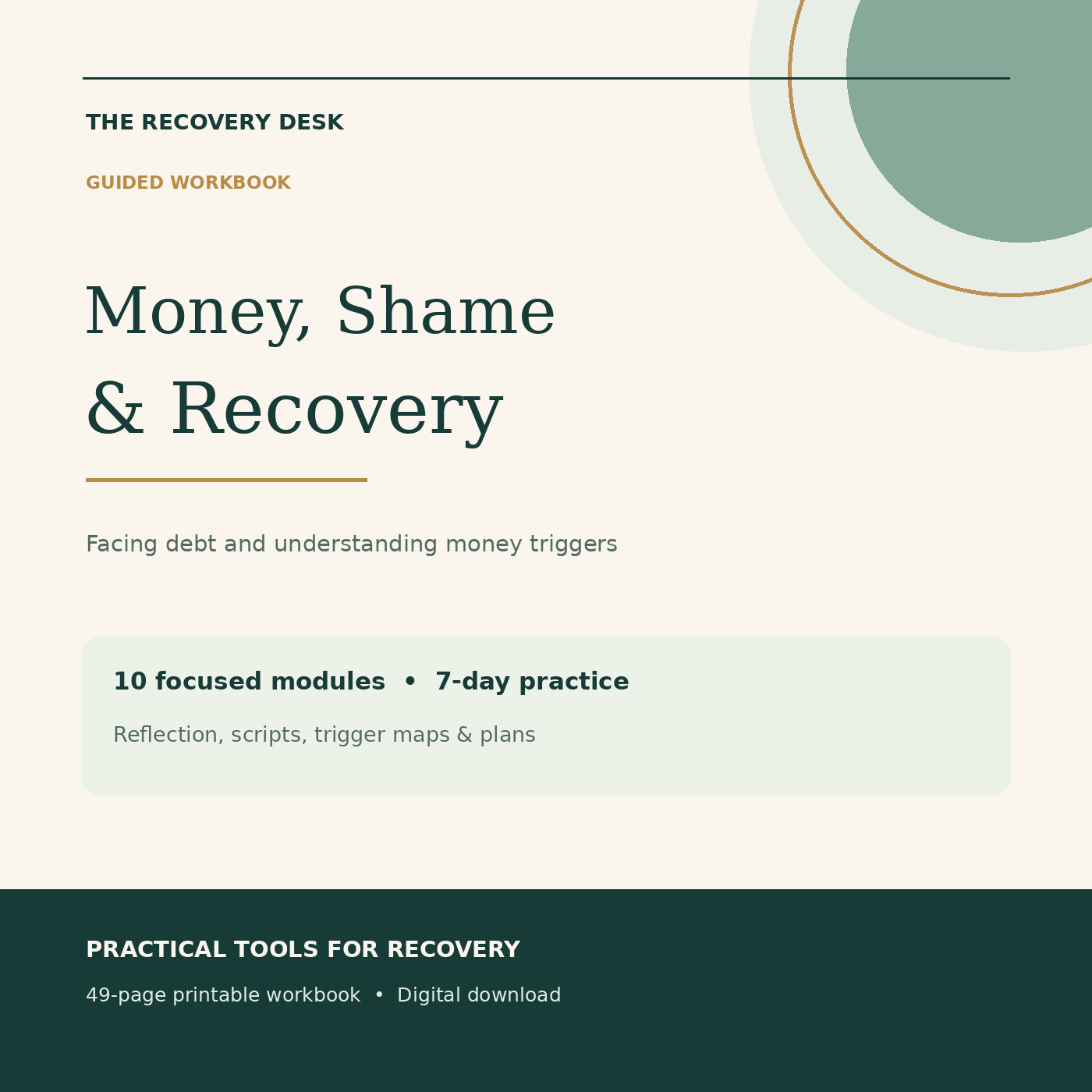
Money, Shame & Recovery is a practical, 49-page guided workbook designed to help individuals explore both financial shame and the ways money can become connected with substance use risk. 51_money-shame-and-recovery-wor…
Through 10 focused modules, reflection worksheets, scripts, trigger maps, action plans, and a 7-day practice, this resource helps you approach money problems one situation at a time rather than trying to fix everything at once.
The goal is not to create a perfect budget.
It is to reduce avoidance, protect essential needs, understand your money triggers, and identify safer next steps.
WHAT’S INCLUDED?
1. Name the Shame Without Becoming It
Separate the financial situation from what you believe it says about you.
Explore:
- Debt and financial shame
- Harsh self-labels
- Avoidance caused by overwhelm
- Separating facts from judgments
- Using realistic self-compassion while still taking responsibility
2. Map Money as a Trigger
Money can create different risks depending on the situation.
Explore how you respond when:
- You have available cash
- You do not have enough for essentials
- Debt pressure increases
- Unexpected money arrives
- Money triggers urges to use, spend, hide, borrow, isolate, or avoid
Develop an if-then plan for the money situation that affects you most.
3. Open What You Have Been Avoiding
Bills, banking apps, emails, and collection letters can feel emotionally overwhelming.
This section helps you break avoidance into smaller steps.
Explore:
- Opening one bill at a time
- Checking balances without trying to solve everything immediately
- Identifying due dates and minimum payments
- Setting a stopping point before you begin
- Asking for support when facing financial information alone feels too difficult
4. Protect Essentials First
Financial recovery does not mean sacrificing basic needs to repay everything immediately.
This module helps you identify priorities such as:
- Housing
- Food
- Utilities
- Medication
- Transportation
- Immediate safety needs
It also encourages you to gather accurate information before agreeing to debt repayment arrangements.
5. Collections Without Panic
Collection calls and notices can create urgency, fear, and shame.
Explore:
- Recording who contacted you
- Verifying the debt before responding
- Asking for written information
- Protecting sensitive personal information
- Seeking official consumer guidance or qualified assistance when necessary
The focus is on slowing down before making decisions under pressure.
6. Borrowing and Family Boundaries
Money owed to family or friends can affect both finances and relationships.
Explore:
- Being honest about what you currently know
- Avoiding unrealistic repayment promises
- Respecting another person’s boundaries
- Creating realistic update dates
- Separating financial repair from immediate relationship repair
Includes practical prompts for preparing a calmer money conversation.
7. Payday and Unexpected Cash
For some people, receiving money can increase risk just as much as not having enough.
Explore:
- Payday triggers
- Tax refunds, settlements, gifts, or unexpected cash
- Planning the first 24 hours after money arrives
- Paying essential expenses first
- Scheduling supportive contact
- Creating boundaries around how another person may help with your money
8. When There Is Not Enough
Financial scarcity can create intense urgency.
This section helps you identify the immediate need without treating the situation as a personal failure.
Explore:
- Food shortages
- Housing concerns
- Medication costs
- Transportation
- Bills you cannot currently cover
- Community assistance and payment arrangements
- Emotional support when there is no immediate financial solution
9. Spending and Emotional Relief
Not every purchase is a problem.
This module focuses on noticing when spending becomes a way of escaping difficult emotions.
Explore:
- What spending seems to promise in the moment
- Emotional triggers behind purchases
- Delaying non-essential spending
- Finding another source of relief or connection
- Reviewing spending without punishment or shame
10. Repair Over Time
Financial recovery is usually gradual.
You may still have debt while making meaningful progress.
This section helps you notice actions such as:
- Opening mail
- Making phone calls
- Understanding your options
- Asking for qualified help
- Following through on small financial tasks
- Reviewing your situation regularly without obsessing over it
The focus is on progress you can control rather than expecting every balance to disappear quickly.
7-DAY MONEY & RECOVERY PRACTICE
The workbook also includes a 7-day guided practice to help you notice patterns between money, emotions, and recovery.
Each day encourages you to reflect on:
- What money situation or shame thought appeared
- What happened in your body or mood
- Whether you felt an urge to use, spend, hide, or avoid
- What you did next
- What you may want to keep or adjust tomorrow
The practice is designed as a record, not a score.
You do not need to share financial amounts you want to keep private.
WHO IS THIS WORKBOOK FOR?
This resource may be especially helpful for:
- Individuals navigating debt during recovery
- People experiencing financial shame about money lost while using
- Individuals avoiding bills, banking apps, or collection notices
- People who have borrowed money from family or friends
- Individuals whose payday or access to money increases substance use risk
- People who experience anxiety when money is low
- Individuals using spending for emotional relief
- People rebuilding their finances gradually after addiction
- Anyone who wants a practical recovery-focused approach to money without being judged
PRODUCT DETAILS
- Format: Digital PDF download
- Length: 49 pages
- Includes: 10 focused modules
- Additional materials: Reflection worksheets, scripts, trigger maps, planning tools, and a 7-day practice
- Topics: Financial shame, debt, collections, borrowing, payday triggers, unexpected cash, scarcity, emotional spending, and financial repair
- Language: English
- Delivery: Instant digital download
- Intended audience: Individuals navigating substance use recovery and financial stress
- Use: Printable for personal use
No physical product will be shipped.
YOU ARE MORE THAN A BALANCE.
Financial recovery can take time.
You may have debt.
You may have bills you avoided.
You may have borrowed money, spent impulsively, or made financial decisions you wish you could change.
Those situations deserve attention, but they do not define your worth.
Sometimes the next step is opening one letter.
Sometimes it is protecting rent and groceries before dealing with an older debt.
Sometimes it is planning for payday before the money arrives.
Money, Shame & Recovery helps you approach those moments with practical planning rather than punishment.
Face the situation. Understand the trigger. Take one workable step.
IMPORTANT INFORMATION & LICENSING
This workbook is an educational resource intended for general recovery reflection, financial shame exploration, money-trigger awareness, and practical planning.
It does not provide individualized financial, legal, insolvency, credit, tax, medical, or clinical advice.
Debt laws, collection practices, benefits, and repayment options vary by jurisdiction. Seek qualified or regulated professional guidance when making significant financial or legal decisions.
Protect essential needs such as housing, food, medication, transportation, and safety when exploring repayment options.
If money stress is creating an immediate urge to use or you feel unsafe, contact an appropriate support person, healthcare professional, crisis service, or emergency service.
No workbook can guarantee debt repayment, improved credit, abstinence, financial stability, or a particular recovery outcome.
Your purchase includes a digital PDF for personal use only. Resale, unauthorized redistribution, or sharing the file publicly is not permitted.